The Hidden Home Cost Buyers Rarely Think About: Underground Electrical Service Lines

Updated: Jun 28
By: Adriana Perez, Texas REALTOR®

Most buyers walk into a home thinking about the kitchen, the roof, the flooring, the backyard, the school district, the monthly payment, and whether the house feels right.
Those things matter.
But every now and then, a homeowner’s post in a neighborhood group reminds us that some of the most expensive home issues are not always visible from the street, the listing photos, or even the first showing.
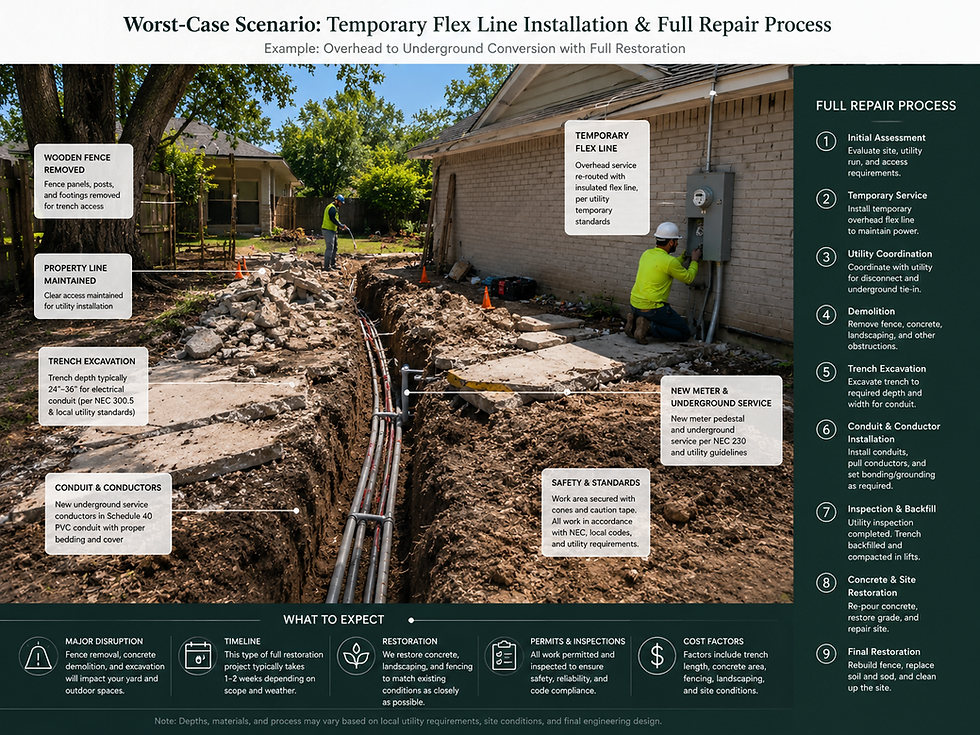
Recently, a Houston-area homeowner reported that the underground electrical line, which ran from a transformer in a neighbor’s yard to their house, had corroded after years of exposure to the elements. CenterPoint installed a temporary flex line to power the home for a limited period, but the permanent underground service line still needed to be replaced with a current line that met the City of Houston code. The homeowner was looking for a master electrician and knew the repair would cost thousands.
The lesson? A home can look perfectly normal on the outside, while an expensive utility issue is buried underground.
In many Houston-area neighborhoods, especially established subdivisions, electric service may not come from an overhead wire running from a pole to the house. Instead, the power may come from an underground system.

That can include:
A transformer located in a front yard, backyard, side yard, or neighbor’s yard
Underground electric lines running through utility easements
A meter base mounted on the side of the house
Service equipment that connects the utility power to the home’s electrical system
In plain English, this means part of the electrical setup that powers the home may be buried under the yard.
That is not automatically bad. Many neighborhoods are designed this way. Underground utilities can make a neighborhood look cleaner and reduce exposure to overhead line issues.
The concern is that buried lines, aging meter equipment, old panels, or service components can be costly to repair or upgrade when they fail.

A normal home tour usually does not reveal the condition of an underground electrical service line. Buyers may see a nice fence, green grass, landscaping, and a clean-looking exterior without knowing what is underneath.
The issue may only become obvious when:
Power flickers
Breakers trip repeatedly
The meter base shows rust or damage
A temporary utility line appears in the yard
The utility company flags the yard for underground work
A licensed electrician identifies service concerns
The home needs an electrical upgrade for safety, code, or capacity
Once the buyer owns the home, these repairs can become the homeowner’s responsibility, depending on the location of the issue, the utility’s service point, the property’s electrical setup, and local requirements.
That is why this belongs on a buyer’s checklist.

As a buyer, you do not need to become an electrician. But you can learn to notice clues.
A home may have underground electric service if you see:
No overhead power line running to the home
Green transformer boxes in yards or near sidewalks
Utility boxes along the fence line
Electrical meter equipment with a conduit running down toward the ground
Utility easements shown on the survey
No visible power poles behind or in front of the home
Temporary gray or flexible lines running through a yard
Fresh utility flags, paint, or trench marks
These clues do not mean the home has a problem. They simply tell you to ask better questions during the option period.

When buying an older home or a home in a neighborhood with underground utilities, ask:
Is the electrical service overhead or underground?
Has the underground electrical service line ever been replaced?
Has the meter base, meter can, or main electrical panel been updated?
Are there any known electrical issues?
Has the home experienced flickering lights, power interruptions, or breaker problems?
Has CenterPoint or another utility company performed recent work at the property?
Are there utility easements in the side yard, backyard, or front yard?
Was any electrical work permitted?
Does the inspector recommend a licensed electrician for further evaluation?
Is there any temporary utility line currently in use?
These questions are not meant to scare buyers away from a property. They are meant to help buyers understand the real cost of ownership.
A general home inspector cannot see through the ground. However, the inspector can still evaluate visible electrical components and identify warning signs.
During the inspection, buyers can say:
“Please pay close attention to the electrical service equipment, meter base, main panel, exterior conduit, and any signs that the underground service line or service entry may need further evaluation by a licensed electrician.”
This gives the inspector a clear focus.
If the inspector sees rust, outdated equipment, unsafe conditions, improper repairs, or signs of trouble, the buyer can bring in a licensed electrician before the option period ends.

A licensed electrician may be worth considering during the option period if the home has:
Older electrical service equipment
Rusted meter housing
Outdated or questionable electrical panels
Aluminum wiring
Frequent breaker issues
Additions or converted spaces
Large HVAC or appliance loads
Underground service in an older subdivision
Evidence of temporary utility work
Visible conduit damage
Utility flags or recent trenching
An electrician evaluation may cost money upfront, but it can help a buyer avoid a much larger surprise later.


The property survey can show easements that affect the home. A utility easement may run along the back fence, side yard, front yard, or between properties.
Buyers should review the survey for terms like:
Utility Easement
Public Utility Easement
U.E.
P.U.E.
CenterPoint Easement
H.L.&P. Easement
Aerial Easement
Underground Utility Easement
These easements may affect future repairs, fence placement, landscaping, pools, sheds, additions, or access by utility providers.
The survey does not always explain the condition of underground utilities, but it helps buyers understand where utility access may exist.
Let me ask,
Before reading this, did you know underground electrical service lines could become a major homeowner expense?
No, I had no idea.
I knew about electrical panels, but not buried service lines
Yes, but I didn’t know what signs to look for.
Yes, and I’ve dealt with something like this before.
There is no perfect public website that says, “This neighborhood has underground service lines, and this exact home may have a problem.”
But there are useful tools.
Buyers and homeowners can research:
CenterPoint electric infrastructure maps
CenterPoint grid improvement and progress tools
Texas 811 information before digging
City of Houston permitting requirements
Houston Public Works GIS and infrastructure maps
Survey and title documents
Google Street View and listing photos
Neighborhood group posts and local repair patterns
The goal is to become a better-informed buyer.

Every home has systems: roof, foundation, HVAC, plumbing, electrical, drainage, sewer, utilities, and access.
Some systems are easy to see, others are hidden.
The smart buyer does not panic over every possible issue. The smart buyer knows which questions to ask, which professionals to call, and when to slow down long enough to understand the property.
A beautiful home can still have expensive buried problems. A home with older systems can still be a good purchase if the buyer understands the risk, negotiates wisely, and plans for maintenance. That is the difference between shopping emotionally and buying strategically.
When touring homes in Houston and the surrounding areas, do not only look at the finishes.
Look at the systems.
Look at the meter.
Look at the yard.
Look at the easements.
Look at the signs of past utility work.
And during the option period, use your inspection time wisely.
Because in Texas real estate, the best buyers are not just looking for a house that feels like home. They are learning how that home actually works.
Adriana Perez - Texas REALTOR®
409-927-0881


Comments